Showing posts with label ecology. Show all posts

Habitat vs Niche - Free Worksheet

Thursday, January 15, 2026


Habitats and Niches

A habitat is the place where a plant or animal lives. It provides food, shelter, protection, and a place to find mates. A habitat can be as large as an island or as small as a tree or a rock.

A niche is the role an organism plays in its habitat. It includes what it eats, how it gets food, and how it interacts with other living and nonliving things. Different niches allow many species to live together without competing too much.

For example, in a school, the building is the habitat, but teachers have different niches—one teaches science, another teaches English, another teaches social studies.

In nature, animals and plants also have different niches. In a forest, woodpeckers and bats eat insects, helping control insect populations. Squirrels and chipmunks spread seeds when they store food or leave droppings, helping new plants grow.

On the Galápagos Islands, several types of finches live in the same habitat but have different niches. Some eat insects, others eat seeds, and others eat cactus. Their different beaks help them eat different foods, allowing them to survive together.

Habitats stay healthy and balanced because organisms each have a special niche.


Habitat vs Niche Free Worksheet


📄 Free Worksheets

Check out our full list of free worksheets!

Teachers: Use these worksheets to support your classroom lessons.

Students: Use them to practice and learn something new.

Scavengers vs Decomposers

Thursday, February 27, 2025


Scavengers vs. Decomposers:
Key Differences Scavengers, such as hyenas and vultures, are animals that consume dead organisms, contributing to decomposition. Decomposers, like fungi and bacteria, are primarily microorganisms that break down organic matter, completing the decomposition process.
example scavenger and decomposers

Ecological Roles

Both scavengers and decomposers are vital for ecosystem health. Scavengers initiate the breakdown of dead material, while decomposers fully recycle nutrients back into the environment, preventing the accumulation of dead organisms.
example scavenger and decomposers

Examples of Each Examples of scavengers include hyenas, vultures, beetles, and raccoons. Examples of decomposers include fungi and bacteria.
example scavenger and decomposers

Please check out our YOUTUBE channel. We have created 3200 videos, have had 170 million views, and have 530,000 subscribers.

Biological Organization -- Organism Population Community

Friday, April 29, 2022


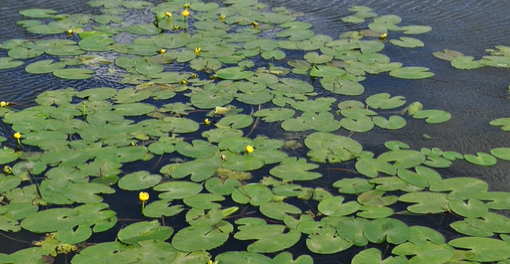
The Okefenokee swamp is the largest “black water swamp'' in north america.

Let’s use this large wetland in order to help us understand the difference between an organism, a population, and a community.


The Okefenokee swamp is home to many plants and animals.

You will find alligators, water lilies, pitcher plants, raccoons, rattlesnakes, spiders, along with many more plants and animals.


okefenokee swamp


An organism is any organic,living system that functions as an individual entity

Examples would include an individual spider or bullfrog,  water lily, or a raccoon.


gator an organism

A population is defined as a group of individuals of the same species living and breeding within a given area.

In the swamp this would include the population of alligators,or turtles , or water lilies.


population water lillies


Finally, a biological community is  All of the populations living and interacting within a particular geographic area 


biological community

This would include all of the different plant and animal species found within the Okefenokee swamp,

In fact the community of okefenokee swamp includes 621 species of plants growing in the swamp, 39 fish species, 37 amphibian, 64 reptile, 234 bird, and 50 mammal species.


Population Size


Animal Migration-Let's Get Moving

Saturday, March 13, 2021

Have you ever observed geese flying overhead in a V formation and wondered, what are they doing?

Animal migration is the periodic journey of an animal from one place to another and then back again. There are many examples of animals that migrate. Geese are one example. Geese migrate in search of favorable weather, a place to breed, and a food supply. In just 24 hours, these birds can travel 2,214 kilometers from Canada to the southern U.S. or vice versa. 


geese flying


The Grants Caribou is another example of an animal with a long migration journey. These animals travel almost 4000 km in order to reach their calving grounds and find food sources that satisfy their vegetarian lifestyle. 


The Arctic Tern will fly more than 17,000 kilometers between their summer home in the Arctic Circle and their winter residence near the South Pole.


Arctic Tern


Other animals like zooplankton migrate over short distances. During the day, zooplankton migrates to deep dark waters to hide from predators. When the sun starts to set, zooplankton rises back to the surface to eat under the protection of darkness. 


Why do animals migrate?

There are several reasons.


Animals may migrate in order to avoid cold temperatures. Geese are an example of animals who migrate south in the winter in search of warmer temperatures. 

Animals may migrate in order to find food. The Grants Caribou’s diet consists of specific plants such as willows, sedges, and lichens. Caribou must travel continuously to find adequate food. The bar-headed goose migrates over the Himalayas to spend the winter in parts of South Asia where it feeds on barley, rice and wheat.


Animals may migrate to an area that provides a more favorable environment for reproduction. Two fish species serve as examples of animals that migrate for reproductive reasons: the salmon and the alewife. Salmon migrate each year to their home rivers and streams to reproduce. Salmon must travel upstream and often have to make impressive leaps over rapids and low waterfalls to reach their breeding grounds. These fish have the ability to jump nearly 12 feet in the air! Though alewives spend most of their lives at sea, they will migrate back to freshwater during the spring to spawn. Female alewives can lay up to 300,000 eggs!

insect migration


Insects even migrate. Some winged insects such as locusts and other flying insects like butterflies migrate every year.
The monarch butterfly migrates from southern Canada to a warmer climate in central Mexico where they spend the winter and mate.


Annually, mass migration events occur in the Serengeti. 1.7 million wildebeest and hundreds of thousands of large game animals such as gazelles and zebras follow circular patterns of movement looking for new and more abundant food sources.


So maybe, the next time you get an urge to go on a road trip or a long walk, it may be your inner compass telling you it is time to migrate.


Related Links

What is Ecology


Keystone Species-The Beaver

Sunday, November 8, 2020


A keystone species has a large impact on their habitat given their size and numbers. Their daily activities impact all kinds of other species.

A keystone is a central stone at the summit of an arch, locking the whole together.

A keystone species helps keep the entire ecosystem together.


keystone species


When beavers build their dam and lodge they basically create their own wetlands which impact many other organisms.

In addition, as the number of beavers increase the biodiversity of the ecosystem increases, and also the inverse fewer beavers less biodiversity.

You may have heard the expression “ Busy as a beaver?”

That is because they stay busy building stuff.

Beavers build dams and a lodge to live in.


The dam transforms a stream or creek into a wetland.

Beavers are highly adapted for water and are great swimmers, They can stay underwater for up to 15 minutes. They are also safe from many predators while in the water.


beaver swimming


So…. they just create their own wetland by building a dam.

In turn, this wetland impacts many other species.

In doing so, beavers change the distribution and abundance of many other animals and plants, mostly by indirect interactions


Behind the beaver dam, a pond of still water is formed.  This pond is then populated by animals and plants that typically live in lakes rather than streams.


When beavers cut down trees for food and for building their dams and lodges, they select the species of trees that they prefer and leave other tree species standing.  Consequently, after many years, the forest beside a beaver pond is usually dominated by different tree species than it was before beaver occupation, and in the gaps where the beavers removed trees, bushes and saplings now grow.


The beaver's dam-building skills impact all of the following, 

birds amphibians reptiles invertebrates tree large animals like moose and many more organisms.


Another key point of a Keystone species like a beaver is that they can be used to determine the health of an ecosystem.


So in reality, the largest rodent in North America is actually a dam-building, tree eating, superhero.


beaver cartoon

Related Links


Powered by Blogger.
Back to Top