Showing posts with label omnivore. Show all posts

Heterotrophs- Carnivores-Herbivores-Omnivores-Decomposers

Wednesday, February 16, 2022


Heterotrophs


Every day in some form this relationship takes place. The predator in this case the cat stalks its prey while the prey must avoid becoming lunch. Why do cats have to hunt other organisms? They are heterotrophs and that is what heterotrophs have to do to stay alive.
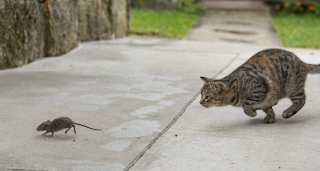
example heterotrophs

Heterotrophs are organisms that get their energy from other organisms. The word heterotrophs is derived from hetero which means “another” and trophic which means “nutrition.” Therefore, an organism that is a heterotroph gets its nutrition by consuming other organisms. Heterotrophs use the glucose from other organisms in order to produce ATP in a process called cellular respiration. In turn, the ATP is converted into energy. Heterotrophs are also called consumers because they consume other organisms. There are four main types of heterotrophs. Carnivores eat mainly meat or other organisms. They are considered predators because they hunt their prey in order to gain energy from the prey. Common examples would be a lion, a jaguar, and many snakes. However, some insects like a dragonfly and Praying Mantis are carnivores. The oceans also contain a large number of carnivores like sharks, squid, and barracudas.
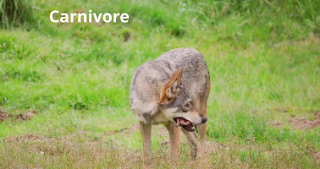
carnivore

An omnivore eats both plants and animals. Most humans are omnivores along with dogs, and cats. Omnivores are found in all of the major terrestrial and aquatic biomes. For example, in the desert, you may find a small rodent called the Jerboa which likes to feed on plants and animals. The clownfish is an example of an omnivore found in the ocean, and most bears are omnivores. They will consume both plants and other animals.
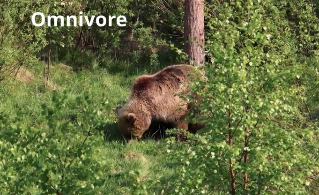
omnivore

Herbivores eat plants. Common examples are horses and cows. One of the largest land animals found on the planet, the elephant, is an herbivore and feeds on grass, trees, fruit, and other plants.
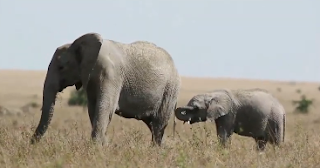
herbivore

Decomposers are also heterotrophs. They are organisms that use enzymes and chemical reactions in order to break down once-living organisms. There are two main types of decomposers. Saprotrophs absorb their nutrition from decaying organisms. Examples are bacteria and fungi like mushrooms. Detrivores ingest small bits and pieces of dead animals or feces. For example, flies, dung beetles, and earthworms are detritivores. If you look at an energy pyramid you will find heterotrophs right above the consumers all the way to the very top of the energy pyramid.
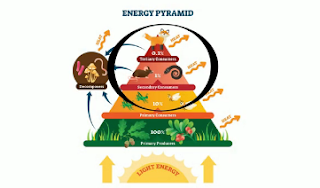
energy pyramid

The base of the pyramid is always occupied by autotrophs that get their energy from the sun. Herbivores which are also called primary consumers make up the next level because they eat plants. Carnivores and omnivores are found next because they eat the herbivores. These organisms are also called secondary consumers. Finally, the top of the pyramid is occupied by the top consumers called tertiary consumers which eat secondary consumers.

Food Chain in an Ecosystem

Monday, March 29, 2021


In ecology, a food chain is a diagram that illustrates organisms that eat one another so that energy and nutrients are transferred from one organism to the next. For example, take a look at this food chain involving a hawk.

food web


Notice the hawk eats the snake which eats the mice which consumes the grasshopper which consumes the producers. At each level, energy is being transferred from one organism to another. 

There are a couple keywords that will help you understand a food chain. First is autotroph and heterotrophs. An autotroph which can also be called a producer creates its own food for energy. A producer may use photosynthesis or chemosynthesis. Autotrophs are the foundation of every ecosystem on the planet.

autotroph vs heterotroph


Most producers use sunlight to make food in a process called photosynthesis. During photosynthesis, producers remember autotrophs are also called producers, make food from carbon dioxide water, and sunlight.

However, some autotrophs ( producers) are Chemoautotrophs that use energy from chemicals to build organic compounds without energy from the sun. This is called chemosynthesis.

chemoautotroph


Some bacteria found at deep ocean vents use chemosynthesis.

A heterotroph also called a consumer, eats other organisms for their energy.  A consumer that eats only plants is a herbivore. 

herbivore


A carnivore like a wolf eats other animals.

carnivore


An omnivore eats both plants and animals.

omnivore


You may also notice in the food chain decomposers. These are organisms that gain energy by breaking down the remains of other organisms. Examples include fungi and bacteria.

Let’s take a closer look at a food chain of a fox.

food chain fox


At the base of the food chain lie the primary producers. The primary producers are autotrophs and are most often photosynthetic organisms such as grass.

The organisms that eat the primary producers are called primary consumers. Primary consumers are usually herbivores, plant-eaters, in this example it is a grasshopper.

The organisms that eat the primary consumers are called secondary consumers. In this example, the mouse eats the grasshopper.

The organisms that eat the secondary consumers are called tertiary consumers. In this food web, it is the fox.

Some food chains have additional levels, such as quaternary consumers—carnivores that eat tertiary consumers. Organisms at the very top of a food chain are called apex consumers.

The arrows always point in the direction of where the energy is being transferred.

The energy of the plants is transferred to the primary producers.

Related Links

Ecosystems

What is an Arachnid?

Build a Dichotomous Key

How to read a Dichotomous Key


Powered by Blogger.
Back to Top